
Camouflage Telecom Towers for Maldives Resorts: A Guide
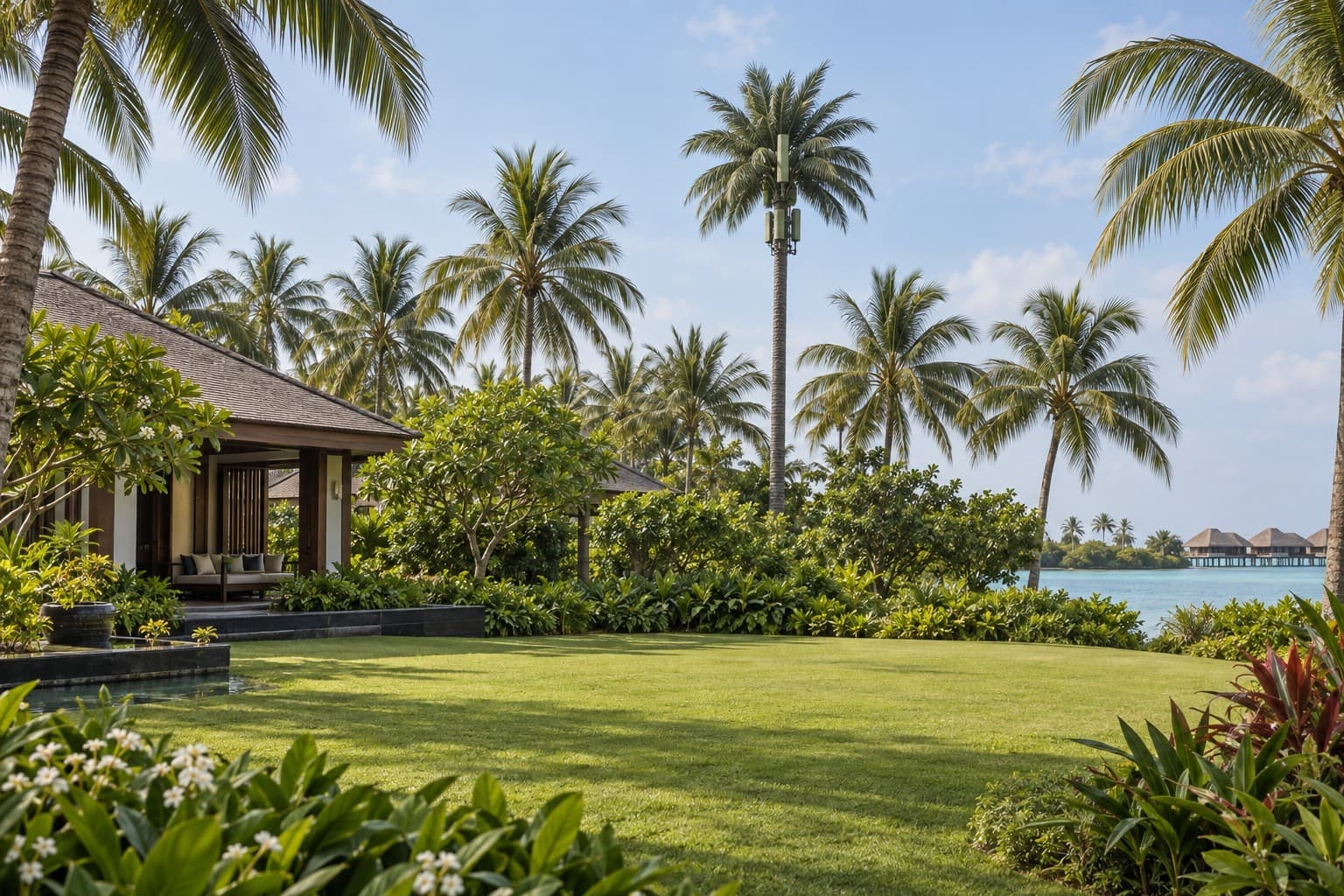
Guests arriving at a Maldivian resort expect their phones to work from the jetty to the far end of the beach. Delivering that coverage needs telecom antennas mounted high above the island, and a conventional steel mast rising above the palms is rarely what a resort wants in its view. A camouflage telecom tower solves that tension: it carries the same equipment, built to look like part of the island.
What is a camouflage telecom tower?
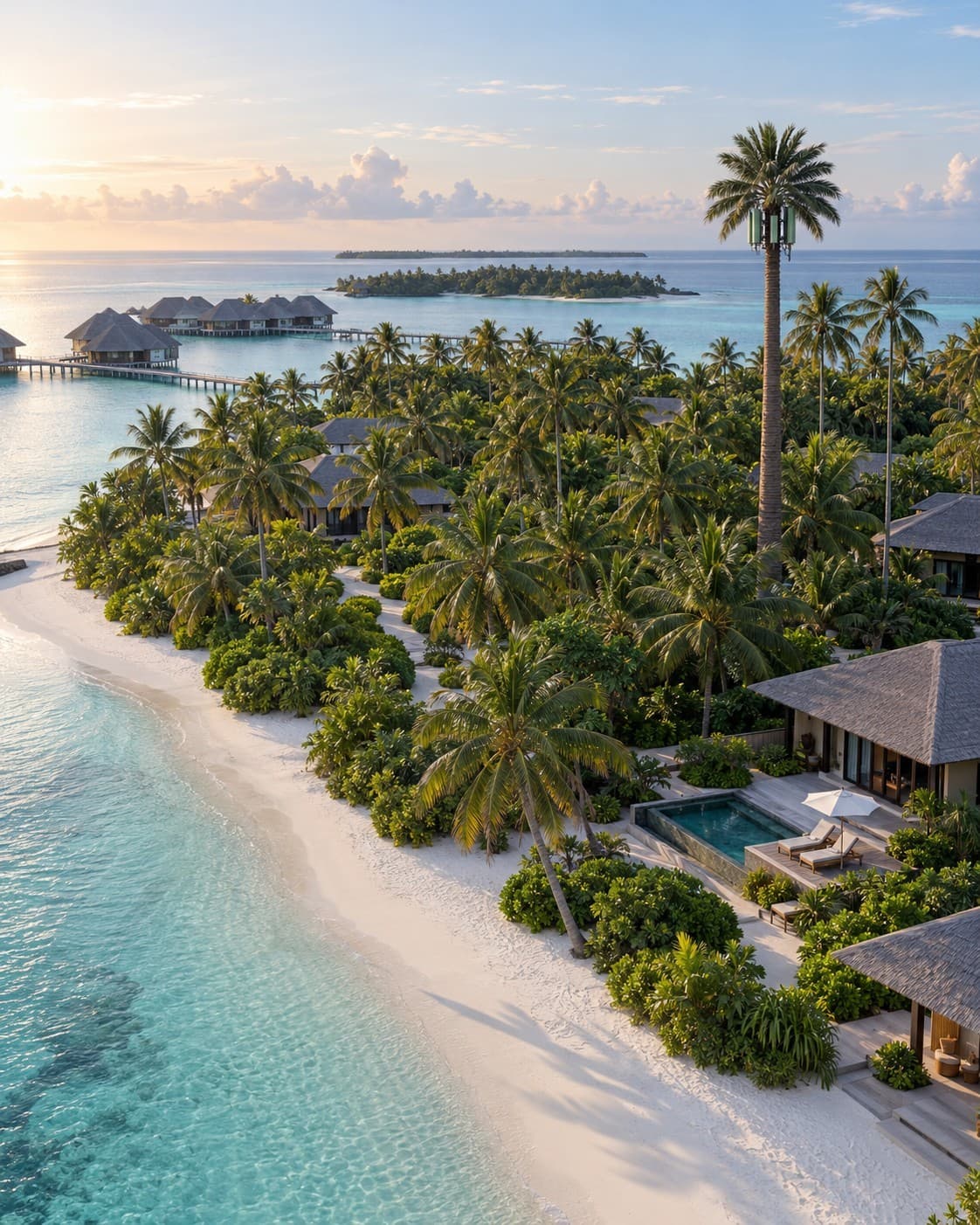
A camouflage telecom tower, also called a stealth tower or disguised mobile tower, is a telecom monopole built to look like a tree. In the Maldives the natural choice is a palm tree tower: the steel trunk is textured like a coconut palm and the antennas sit inside a crown of artificial fronds. From the beach or the lagoon it reads as one more palm, while the provider's equipment does its job at the top.
Palm, pine or conventional
Palm-tree camouflage suits most resort islands because it sits among the island's own palms. Pine and other tree forms have a denser crown, which can suit a heavier equipment load or a different planting scheme. Conventional monopole or lattice towers still have a place in back-of-house and utility areas, where concealment matters less than cost and access. Height, form and equipment capacity are custom fabricated for each site, subject to engineering and approvals.

The engineering behind the disguise
Appearance is only half the design. The trunk finish, crown proportions and antenna concealment are worked out together with the signal requirements, wind loading, coastal corrosion protection, foundation design and safe access for maintenance. A tower that looks right but corrodes in salt air, or cannot be climbed safely for servicing, is not a finished design.
One shared tower, or separate towers
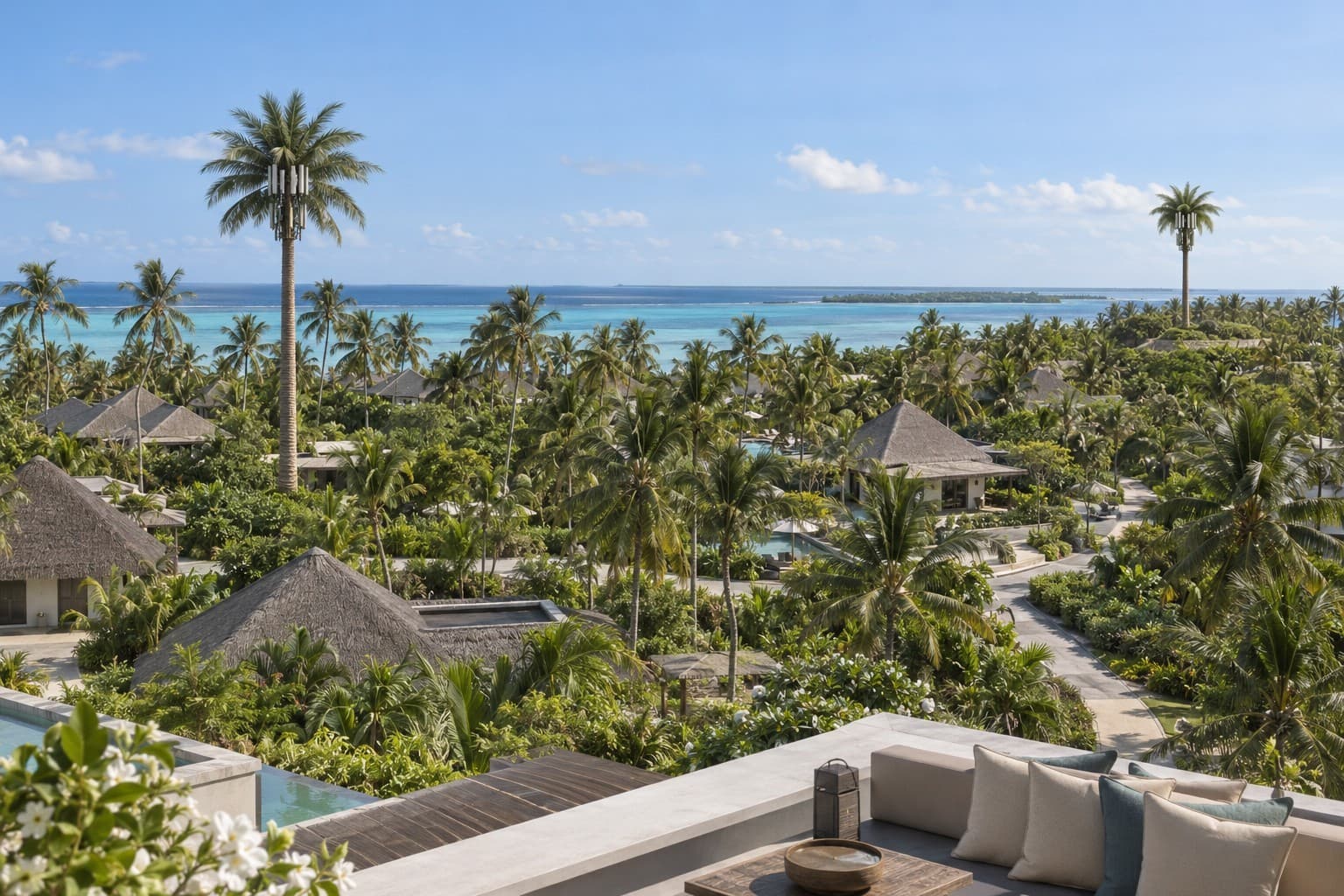
A single shared tower can carry equipment for the participating mobile providers, which keeps the number of tower sites, foundations and visible structures on the property to a minimum. Structural loading, antenna separation, interference, cable routes and power have to be reviewed with the providers before that configuration is confirmed. Separate towers give each provider its own structure and capacity, and can suit a larger property or different coverage needs, at the cost of more construction, land use and maintenance. Which arrangement is stronger depends on the property and on what the providers require.
Can a resort own its tower?
Yes. A camouflage tower can be owned by the resort. Ownership gives the resort a direct say in the tower's appearance, capacity, access and long-term maintenance. Providers can install their equipment on a resort-owned tower subject to their technical acceptance and a separate agreement with the resort. The providers supply and operate their own network equipment; power, backhaul, permits and the other scope interfaces are allocated in each project's proposal.
From fabrication to the island
A resort tower project runs through five stages: a consultation and site assessment; coordination with the providers and engineering of the tower and foundations; custom fabrication, shipping, customs clearance and transport to the resort; construction of the foundations, erection of the tower and installation of the camouflage; and finally inspection, documentation and handover. Island logistics, from barge transport to mobilising crews and equipment, are often the deciding factor in a programme.
Looking after the tower over its life
Salt, sun and wind work on every structure in the Maldives. Rishthaa's aftercare covers structural checks, corrosion treatment, coatings, fastenings, access components and the camouflage elements themselves. When a resort requests maintenance or an inspection, Rishthaa technicians arrive on site within two days to begin the work or carry out the initial assessment; completion time then depends on the work diagnosed and the materials it needs.
Rishthaa's experience on resort islands
Rishthaa has delivered telecom tower works for Dhiraagu and Ooredoo across the Maldives, including on resort islands: complete monopole works for Ooredoo and monopole foundations for Dhiraagu at Anantara, monopole foundation works for Dhiraagu at Sai Lagoon, and the foundation and erection of a self-supporting monopole for Ooredoo at K. Maadhoo Finolhu. The same crews carry out tower erection, protective painting, rectification and maintenance across island sites.
How to start
A reliable price depends on a site survey, the tower configuration and the providers' requirements, so every project starts with a conversation. Rishthaa meets the resort's engineering and management teams, surveys the property, and prepares a proposal setting out the design, scope, programme, responsibilities and cost.
Thinking about a tower for your resort?
See the designs, configurations and aftercare, then arrange a meeting and site survey.